Stress
Last updated: 10 Sept 2025
1731 Views

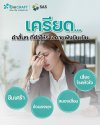
Stress: A Short Word That Harms Both Body and Mind
Stress is a natural mechanism that arises when we face pressure or difficult situations. However, when it accumulates excessively, stress becomes a silent threat that undermines both physical and mental health.
The World Health Organization (WHO) defines stress as a psychological state of worry that occurs when we encounter challenges or threats. When prolonged, it can increase the risk of chronic diseases such as heart disease, dementia, and metabolic syndrome, as well as psychiatric disorders such as depression and anxiety.
Factors Contributing to Stress
Biological: Hormonal changes, particularly involving cortisol and adrenaline, along with age, underlying conditions, and insufficient sleep.
Psychological: Overthinking, repetitive worry, pessimism, lack of self-confidence, or low self-esteemall of which accelerate stress.
Environmental: Pollution, traffic, economic conditions, living environments, and social issues such as exploitation or high competition.
Ways to Cope with Stress
Although stress cannot be completely avoided, its impact can be managed and reduced through practices such as:
Getting sufficient sleep
Exercising regularly
Practicing meditation and breathing techniques
Avoiding pollution and stressful environments
Maintaining a balanced lifestyle
Importantly, research has found that probioticsparticularly the strain Lactobacillus paracasei MSMC39-1, which is linked to the braingut axismay help reduce inflammation and oxidative stress, restore microbial balance, and contribute to stress reduction while supporting better mental health.
Because stress is unavoidable, the key lies in choosing effective ways to copeand probiotics are among the valuable allies in this journey.
Stress is a natural mechanism that arises when we face pressure or difficult situations. However, when it accumulates excessively, stress becomes a silent threat that undermines both physical and mental health.
The World Health Organization (WHO) defines stress as a psychological state of worry that occurs when we encounter challenges or threats. When prolonged, it can increase the risk of chronic diseases such as heart disease, dementia, and metabolic syndrome, as well as psychiatric disorders such as depression and anxiety.
Factors Contributing to Stress
Biological: Hormonal changes, particularly involving cortisol and adrenaline, along with age, underlying conditions, and insufficient sleep.
Psychological: Overthinking, repetitive worry, pessimism, lack of self-confidence, or low self-esteemall of which accelerate stress.
Environmental: Pollution, traffic, economic conditions, living environments, and social issues such as exploitation or high competition.
Ways to Cope with Stress
Although stress cannot be completely avoided, its impact can be managed and reduced through practices such as:
Getting sufficient sleep
Exercising regularly
Practicing meditation and breathing techniques
Avoiding pollution and stressful environments
Maintaining a balanced lifestyle
Importantly, research has found that probioticsparticularly the strain Lactobacillus paracasei MSMC39-1, which is linked to the braingut axismay help reduce inflammation and oxidative stress, restore microbial balance, and contribute to stress reduction while supporting better mental health.
Because stress is unavoidable, the key lies in choosing effective ways to copeand probiotics are among the valuable allies in this journey.
Related Content



In Vitro Fertilization (IVF) is an Assisted Reproductive Technology (ART) that provides hope for couples facing infertility challenges . The procedure involves combining eggs and sperm in a laboratory setting and transferring the resulting embryo into the womans uterus to achieve pregnancy .
22 Nov 2024
